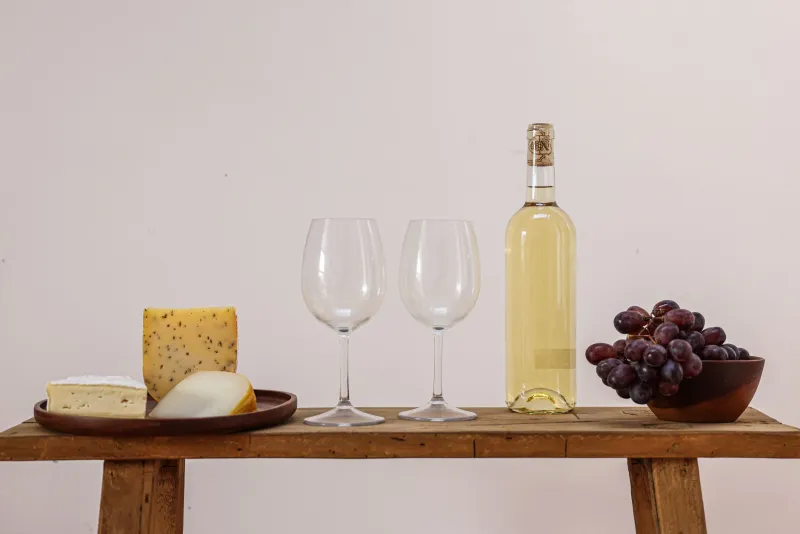
Half a Bottle Isn't a Crisis: A Farm-Kitchen Plan for Leftover Sunnybrook Wine
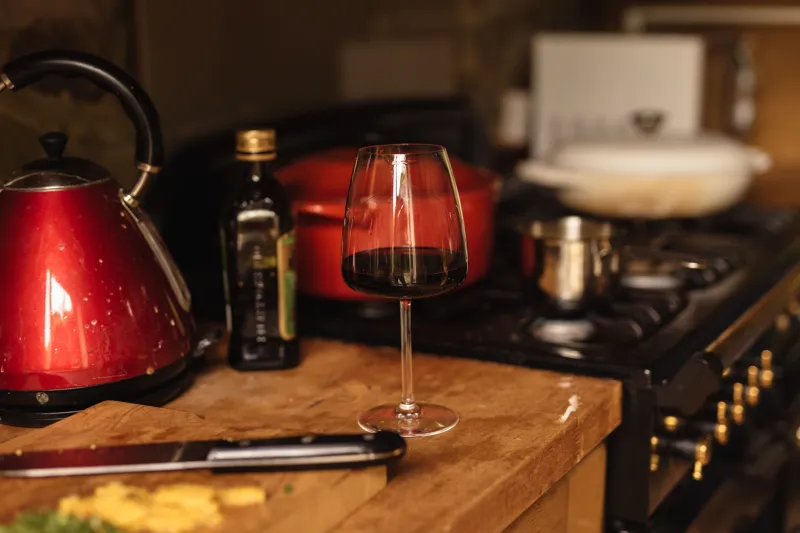
There's a certain kind of quiet that settles over a kitchen on Sunday evening. The plates are stacked, the candles are down to stubs, and there sits the bottle: half full, cork resting beside it like a little punctuation mark. Maybe you meant to finish it. Maybe you didn't. Either way, it feels wasteful to pour a perfectly good glass down the drain.
At Sunnybrook Farm Winery, we see this all the time. Guests buy a bottle they love, take it home, open it on a Tuesday, and then life happens. The good news? An open bottle is not a countdown to disappointment. With a little common sense — and a skillet — leftover wine can earn its keep.
First, the honest clock on an open bottle
Wine is not milk, but it isn't invincible either. Once air gets in, the clock starts. Here's the plain-English version for our bottles:
- Red wines: Usually good for 3 to 5 days if you re-cork and keep them somewhere cool and dark. After day one, we'd move them to the fridge — yes, even reds. Let them warm up a bit before sipping.
- White wines: About 3 to 5 days in the fridge, corked or capped. They'll lose a little sparkle and aroma before they actually go bad.
- Rosé: Think 2 to 4 days in the fridge. Our rosés are fresh and friendly, not built for long marathons.
- Sparkling wine: Not really our lane, but if you have some, a tight stopper and two days in the fridge is about right.
The trick is to treat the bottle like a perishable ingredient, not a trophy. Put the cork back in firmly, stash it in the fridge, and skip the sunny windowsill. A smaller bottle helps, too: pour the leftovers into a clean half-bottle or mason jar so there's less air hanging around inside.
The taste test that beats a calendar
Calendars are useful. Your nose is better. Before you cook with an open bottle, give it a sniff and a tiny taste. If it smells like fruit and tastes like wine — maybe a little flatter than it was — it's fine for the pan. If it has a sharp vinegar edge, it's still often okay for cooking, especially in a braise where it will simmer down. If it smells like nail polish remover or wet cardboard, let it go. That bottle has left the building.
And no, you don't need to be a sommelier about this. Trust your own senses. You're not judging a competition; you're deciding whether to make stew.
Which bottles earn a second life in the kitchen
Not every leftover wine is destined for the same job. A few general rules from our farm kitchen:
- Leftover red is a natural for beef stew, Sunday braises, tomato sauce, and anything with mushrooms. It adds depth without much fuss.
- Leftover white shines in pan sauces, poached chicken, risotto, and steamed mussels. It's also good for deglazing a skillet after you've seared pork chops.
- Leftover rosé is lovely in a quick syrup for fruit, a vinaigrette, or a light poaching liquid for peaches and pears. It brings color and a soft little tang.
One caution: if the wine was expensive and you loved it, don't force it into a random recipe just to avoid waste. Drink the last glass with dinner, or freeze it for a future sauce. Cooking wine doesn't need to be fancy, but it should still taste like something you'd want to eat.
Three low-fuss moves for the half-empty bottle
1. The Sunday braise that starts with the dregs
You don't need a recipe with a French name. Brown some chicken thighs or a chuck roast in a heavy pot, pull the meat out, and soften onions and carrots in the drippings. Pour in whatever red you have left — a cup or so is plenty — and scrape up the brown bits. Add stock, put the meat back in, cover, and let it run low and slow until it falls apart. The wine doesn't have to be the star. It just has to show up.
2. Poaching liquid for fruit or chicken
For pears or peaches, combine a cup of leftover white or rosé with a cup of water, a spoonful of honey, and a few peppercorns. Simmer the fruit until tender, then reduce the liquid a little and spoon it over the top. For chicken, use white wine and water with a bay leaf and a sliced onion. It's a gentle, old-fashioned way to make a weeknight dinner feel a bit more considered.
3. Wine syrup for the fridge door
This is the quiet hero of leftover wine. Simmer about a cup of red or rosé with a quarter cup of sugar until it thickens slightly — maybe 10 to 15 minutes. Let it cool and keep it in a jar. Spoon it over pound cake, stir it into yogurt, or drizzle it on goat cheese. It keeps for a couple of weeks in the fridge and makes a plain Tuesday feel like a small occasion.
Freeze it, label it, stop feeling guilty
If you're not going to cook in the next few days, freeze the wine. Pour leftovers into an ice cube tray, freeze, and transfer the cubes to a labeled freezer bag. Write the type of wine and the date on the bag. Use the cubes within about three months for cooking — sauces, soups, braises. They won't be good for sipping after freezing, but they're brilliant for adding a splash of flavor to a pan.
This is also a good way to save the last glass of a bottle you really loved. Next month's risotto will thank you.
A few things not to do
Don't leave the open bottle next to the stove or in a sunny window. Don't cook with a wine that smells plainly spoiled — a little flat is fine, a lot awful is not. Don't pour a whole bottle down the drain out of guilt; if you truly can't use it, compost it or share it with a friend who cooks. And don't save a bottle for a perfect night that never comes. Wine is meant to be opened.
The last glass is not a test
The next time you find yourself with a half-empty bottle, don't treat it like a problem to solve. Treat it like an ingredient. A splash for the pan, a syrup for the weekend, a few cubes in the freezer — none of it is complicated, and all of it is better than the sink.
If you're not sure what to do with a particular bottle, ask us in the tasting room. We've had plenty of practice. And if the answer is simply "drink it tomorrow with meatloaf," that's a good answer, too.