No Somm Required: A Friendly Field Guide to Tasting Room Talk at Sunnybrook

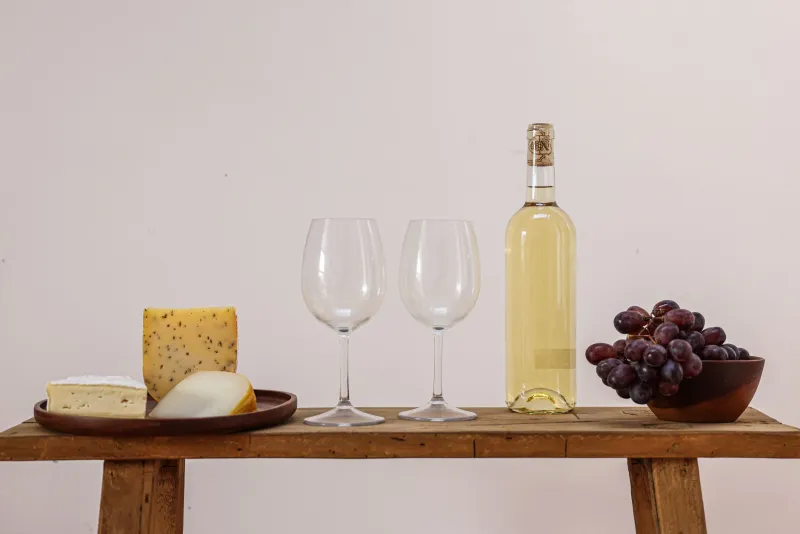
Photo: casual wine tasting at a farm winery tasting room with vineyard views, via i.etsystatic.com
You do not need a certificate to enjoy a glass of wine at Sunnybrook Farm Winery. Most days, our tasting room is full of people in muddy boots, date-night sweaters, and post-hike flannels. But a few wine words can help you get more out of the pour. Not because you need to impress anyone, but because the right word can turn a vague “I like this” into a conversation.
Here is the vocabulary we actually use around the farm, explained the way we would explain it leaning on the tasting bar.
Brix: The Sugar Meter
Brix is just a measure of sugar in the grapes. In late summer, we walk the rows with a little refractometer and squeeze a few berries onto the glass. If the brix is climbing but the acid still tastes bright, we wait. If the sugar is high and the flavors are where we want them, we pick.
At the tasting bar, brix is not a grade or a badge. It is a timing tool. It helps explain why one wine tastes crisp and another tastes rounder. If you are curious, ask whether the grapes were picked early or late. That answer usually tells you more than the number itself.
Dry Does Not Mean Dusty
Dry means not sweet. That is it. During fermentation, yeast eats sugar and turns it into alcohol. A wine can be bone-dry and still smell like peaches, honey, or strawberries. Those are aromas, not sugar.
This trips people up all the time. A fruity rosé can be completely dry. A crisp white can smell like ripe pear and still finish clean. If you want to know before you sip, ask a simple question: “Is this dry or off-dry?” Off-dry means a touch of sweetness. Neither is better. It is just a style.
Tannin: The Grip on Your Gums
Tannin is the drying sensation you feel on your gums and the inside of your cheeks, especially after a red wine. It comes from grape skins, seeds, and sometimes oak barrels. Think of strong black tea that makes your mouth feel a little tight.
Tannin is not the same as bitterness, and it is not a flaw. A young red with firm tannin can soften beautifully with a grilled burger or a plate of sharp cheddar. At Sunnybrook, we like to ask whether the tannin feels like it came from the grape or from the barrel. That question usually leads to a good story about fermentation and aging.
Acidity: The Freshness Dial
Acidity is the zing that makes your mouth water. It is what makes a white wine taste bright instead of flat. Too little acidity and a wine feels heavy or flabby. Too much and it can feel sharp. Good acidity is like a squeeze of lemon on a rich dish: it wakes everything up.
Cool nights around the farm help grapes keep their acidity. That is one reason harvest timing matters so much. If you are drinking a wine with dinner, acidity is your friend. It cuts through creamy pasta, fried chicken, and anything off the grill.
Terroir: A Fancy Word for This Place
Terroir is one of those words that sounds mysterious until you translate it. It means the taste of a place. Soil, slope, weather, and the people farming the land all shape the grapes. Same variety, different site, different wine.
At Sunnybrook, we have blocks that drain differently after rain and spots that catch more afternoon sun. Those differences show up in the glass. Terroir is not magic. It is farming. If you want to taste the idea, ask us which block a wine came from and what makes that spot distinct.
Body: Skim Milk or Whole Milk
Body is the weight of the wine on your palate. A light-bodied white feels like skim milk. A full-bodied red feels more like whole milk. It has nothing to do with how strong the wine is. It is about texture and richness.
A stainless-steel white might be light and snappy. A barrel-aged white might feel rounder and creamier. Neither is more serious. They just belong with different moods and meals. Ask yourself: does this feel light, medium, or full? You already have the vocabulary.
Finish: The Song After the Sip
Finish is what happens after you swallow. Does the flavor fade quickly, or does it linger? A long finish can be lovely, but length alone does not make a wine better. Balance matters more.
If a wine finishes bitter, that might be tannin. If it finishes sour, that might be acidity. If it finishes sweet, there may be residual sugar. The finish is often where the wine tells you what it needs. Try it with food and see how the ending changes.
Oak: A Seasoning, Not a Personality
Oak barrels add flavor. Toast, vanilla, spice, and a little warmth are common. But oak is like salt in a recipe. A little can make everything taste more like itself. Too much and it takes over.
We use older barrels for subtle roundness and newer barrels when we want a more obvious oak note. If you are unsure, ask, “How much oak does this see?” That is a better question than “Is this oaky?” because oak is a spectrum, not a yes-or-no box.
Vintage: The Year on the Label
Vintage is the year the grapes were picked. Weather changes from year to year, so a wine from one vintage can taste different from the same wine in another. A rainy growing season might give a lighter wine. A warm, dry stretch might give riper fruit.
Non-vintage wines are blends from more than one year. They are not lesser. They are simply made in a consistent style. If you like a wine, ask about the vintage. It is a gateway to talking about the farm and the season.
Legs, Aroma, and Bouquet
Legs are the tears that run down the inside of the glass after you swirl. They tell you about alcohol and texture, not quality. A wine with thick legs is not automatically better than one with thin legs.
Aroma is the smell of young fruit and flowers. Bouquet is the more developed smell that comes with age. Both are useful words, but you can also just say, “This smells like a peach.” That works perfectly.
Minerality: Fresh and Stony
Minerality is a word people use for a fresh, stony, chalky impression in a wine. It does not mean there are actual rocks in your glass. It is a sensory shortcut. At Sunnybrook, a cool-climate white might remind us of wet stone or the smell of rain on gravel.
If the word helps you describe what you taste, use it. If it feels like homework, skip it. Wine language is supposed to open doors, not guard them.
The Only Questions You Need
You do not have to memorize a glossary. Bring three or four questions and you are set:
- Is this dry or off-dry?
- What am I tasting here?
- How much oak does this see?
- What would you drink with this?
- Can I try the one next to it?
Those questions will get you further than any fancy vocabulary. The goal is not to talk like a sommelier. The goal is to talk like someone who is curious, comfortable, and having a good time.
At Sunnybrook, the tasting room is a conversation. Use the words that help. Leave the rest at the door. We will save you a stool and pour you something worth talking about.